

It's Personal
- Author: Doug Shearman
- Date Submitted: Apr 14, 2026
- Category: Cancer Center
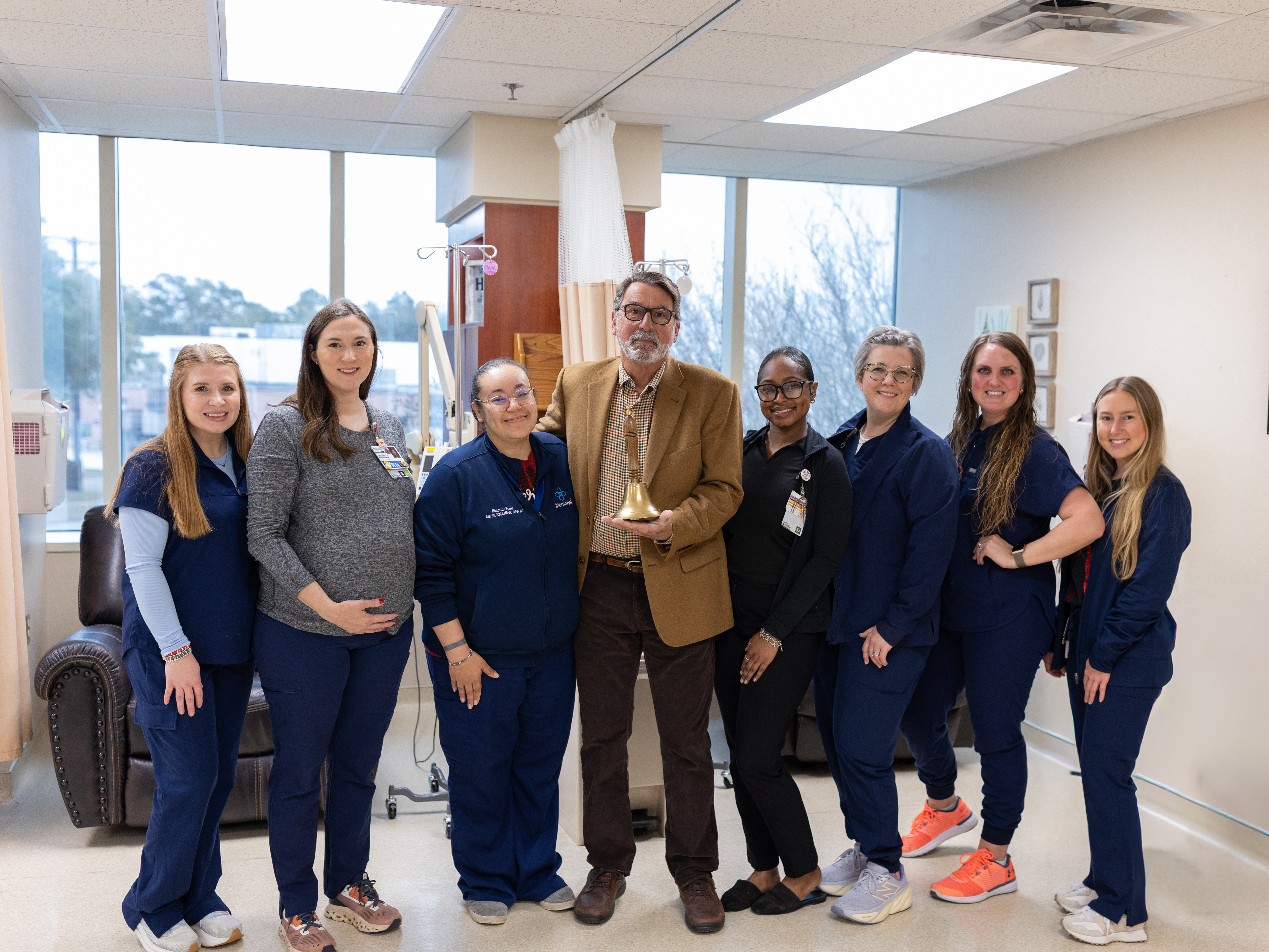
“They aren’t just doing a job. They sit next to you. They explain everything. They know when you’re scared. There’s no dollar figure you can put on that type of work.”
How individualized, empathetic care helped one patient through lung cancer treatment
When Doug Shearman looks back on his lung cancer journey, he doesn’t start with the diagnosis. He begins with the people who listened, reassured, explained and stayed beside him through every step. For him, that level of care wasn’t just clinical. It was personal.
His relationship with his primary care provider, Brian Clements, MD, began decades ago.
“He’s been more than a doctor,” Shearman says. “He’s been a really good friend, someone you can talk to.”
That long-standing trust became the first link in a team that formed quickly once Shearman’s symptoms began in December 2023.
A sudden, sharp pain under his left arm sent him to the Memorial emergency room at 3:30 a.m. Nurses moved quickly, working to provide relief and answers.
“They were really nice,” he says. “They knew something was wrong but kept saying, ‘That pain is temporary. We’re going to get rid of it.’ And they did.”
A few days later, Cliff Courville, MD, pulmonologist, delivered the diagnosis: stage III lung cancer. Soon after, medical oncologist Michael Broussard, MD, and radiation oncologist James Maze, MD, joined Shearman’s treatment team. But what Shearman talks about most isn’t the diagnosis or the medicine—it’s the way he was cared for.
‘A beautiful dance’
He affectionately calls Memorial’s infusion clinic “Room 215,” and the nurses there became central to his story. He describes the way they worked together as “a beautiful dance,” moving around one another with precision and instinct, never missing a detail.
When he had questions he hadn’t had a chance to ask his doctors, a nurse would pull up a chair beside him.
“They aren’t just doing a job,” he says. “They sit next to you. They explain everything. They know when you’re scared. There’s no dollar figure you can put on that type of work.”
He also noticed how much they gave of themselves day after day. Watching them move through long shifts without real breaks, Shearman decided to do something in return. On his treatment Thursdays, he started sending in sandwich trays for the staff.
“They can’t always leave,” he says. “Might as well have something good to eat.”
It was his way of thanking the team members who understood what their patients were going through and supported them at every turn.
The golden rule in practice
Throughout treatment, he returned often to the golden rule: treating others the way you would want to be treated. For him, Memorial embodied that
value.
“You see it everywhere,” he says. “In the way they talk to you, in the way they look out for you, in the way they look out for each other. It all comes back around.”
Compassionate care close to home
Shearman didn’t have to leave his community or the routines that brought him comfort. Between treatments, he walked his marina, mowed his yard and spent time outside because, as he puts it, fresh air and sunshine were their own kind of therapy.
After six rounds of chemotherapy and 25 radiation sessions, he is grateful for both the outcome and the journey.
“You can do everything you need right here,” he says. “And you’re 10 or 15 minutes from home when it’s over. But it’s more than convenience—it’s the people. Those nurses in Room 215? They’re stars. The whole thing is an art.”
Shearman’s treatment plan proved to be incredibly successful, impressing even his doctors. But he wasn’t surprised by the outcome, and he doesn’t call it luck. He calls it faith. He calls it community. And when he talks about Lake Charles Memorial Health System, he highlights the people who made the difference.
“Compassion. Empathy. People who really care about you,” he says. “That’s what I found at Memorial.”
Are you at risk for lung cancer?
Ask your doctor about getting a low-dose lung CT scan. Learn more about it at lcmh.com/lunghealth.